★★☆☆☆ Starter folds · 7 steps
Flat Heart from a 1:2 Rectangle
Published · By The Origami Desk
Most folded hearts come out with a pointy top and no lobes. The fix is a rectangle, and two reverse folds that pull the top corners outward instead of inward.
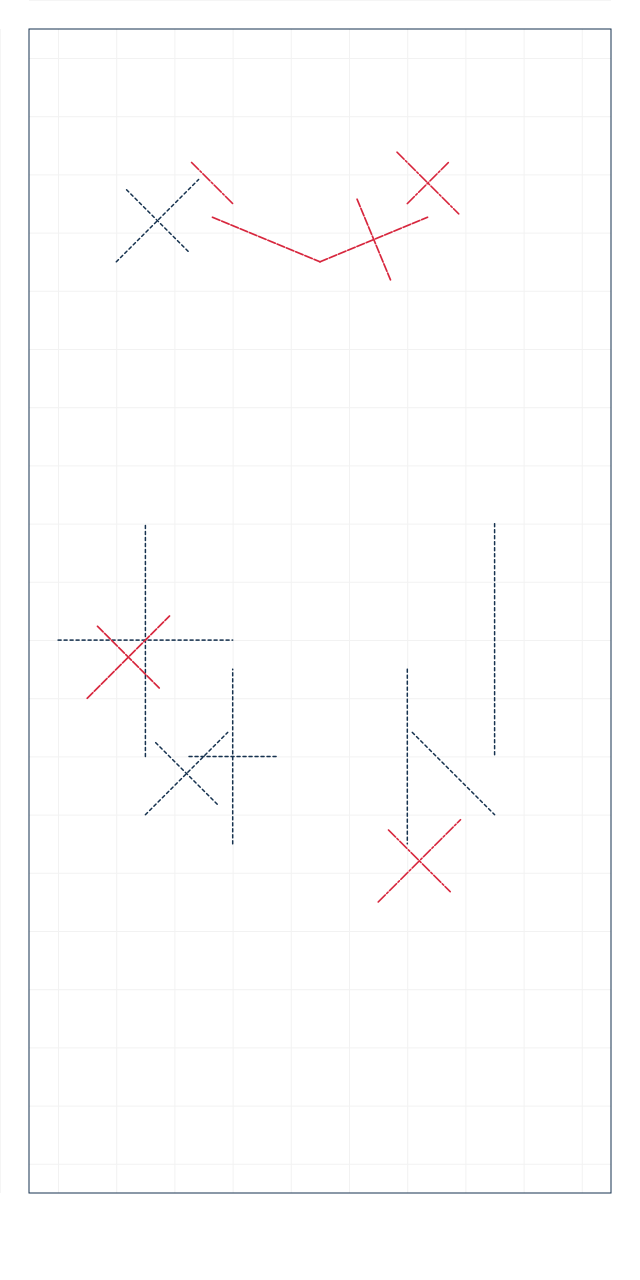
finished crease pattern
Fold sequence
7 / 7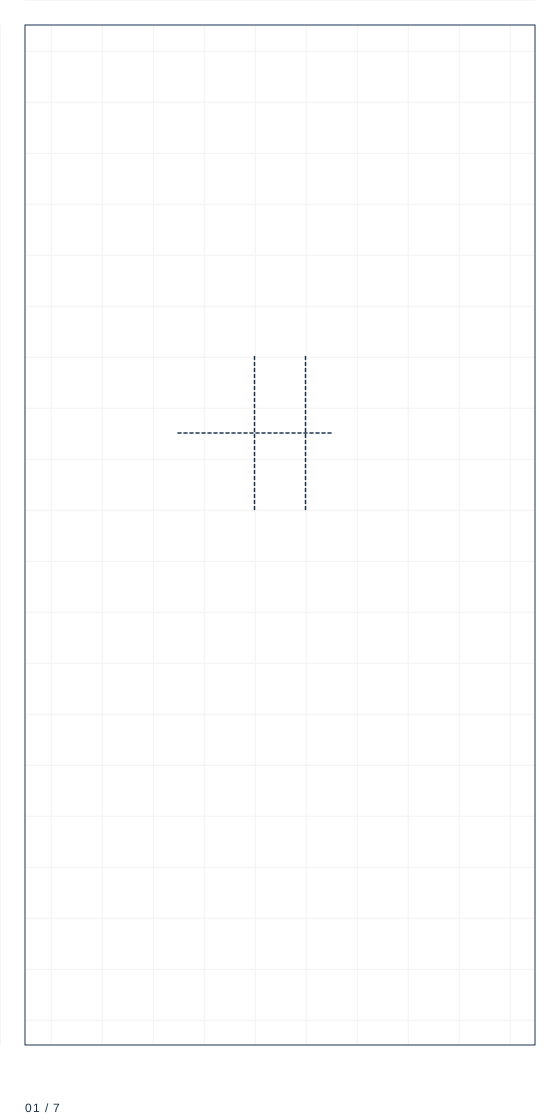
Step 1
Cut or fold a 15 x 7.5 cm rectangle. Place it coloured side up in portrait.
Step 2
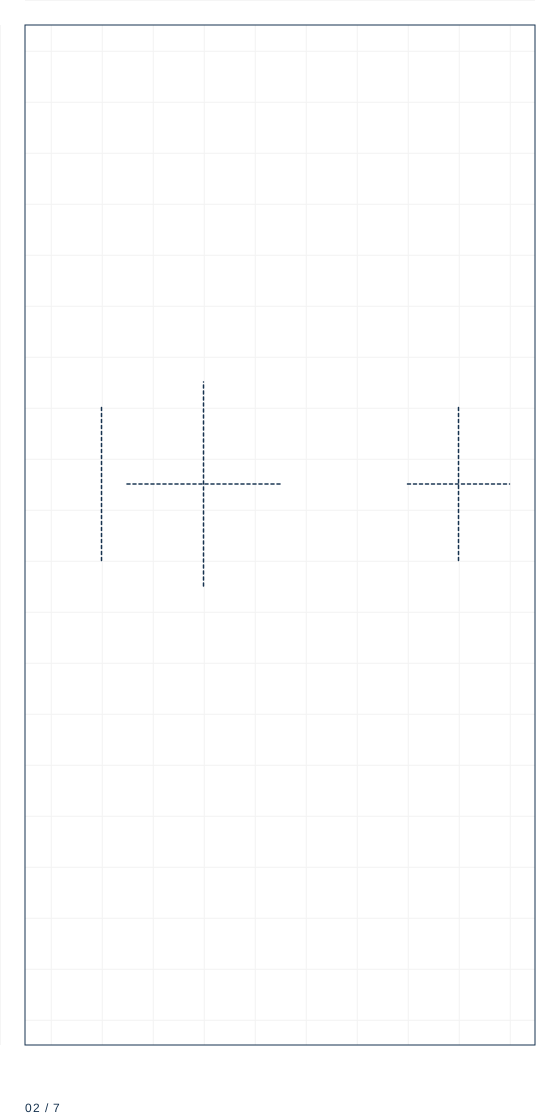
Fold the bottom edge up to the top edge and unfold — only to mark the exact middle.
Step 3
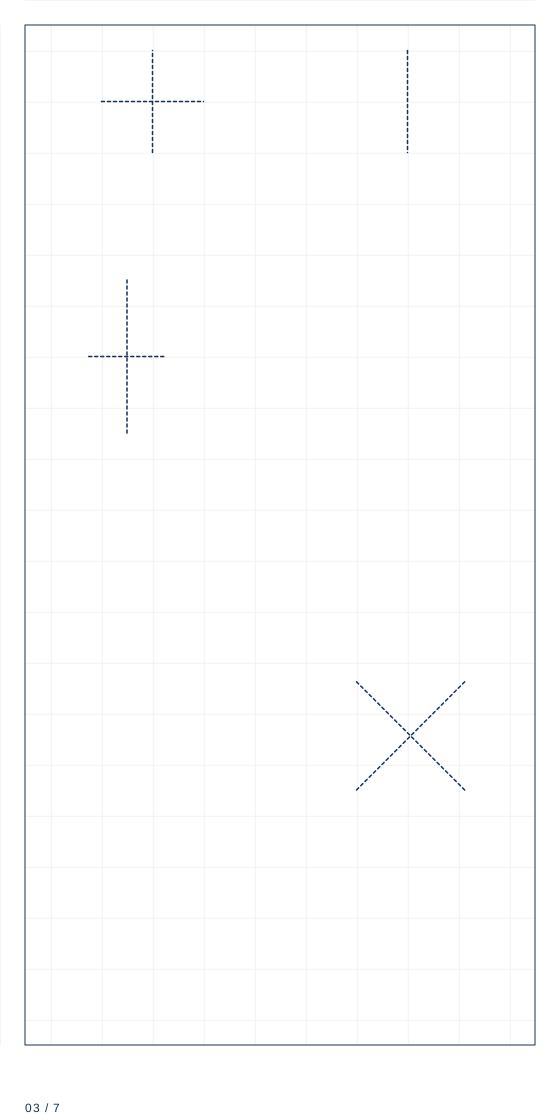
Fold the left edge in to the centre line, then the right edge in to the centre line. The strip is now half as wide.
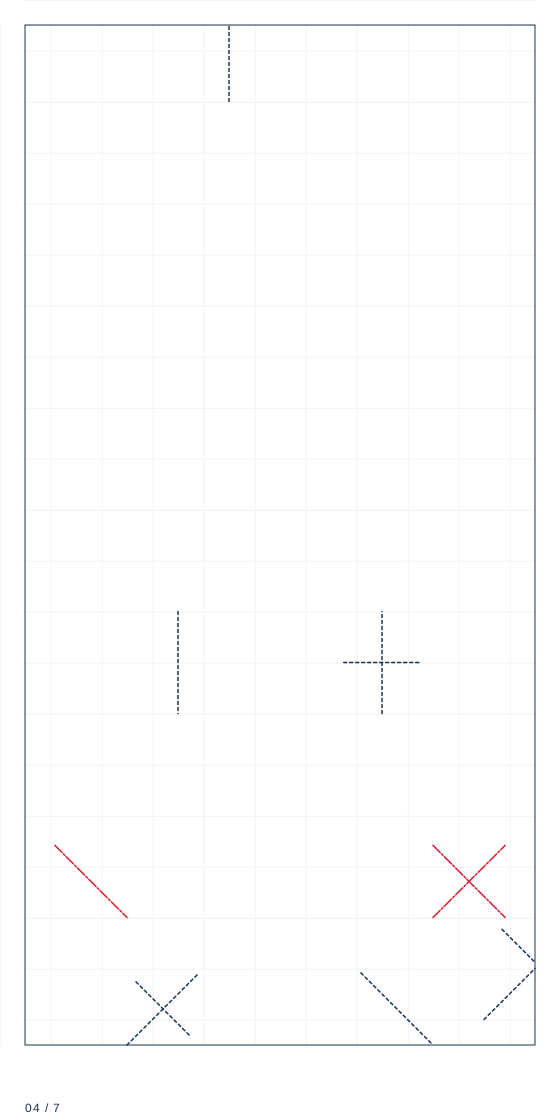
Step 4
Fold the bottom edge up to meet the horizontal middle line, then fold it back down and unfold.
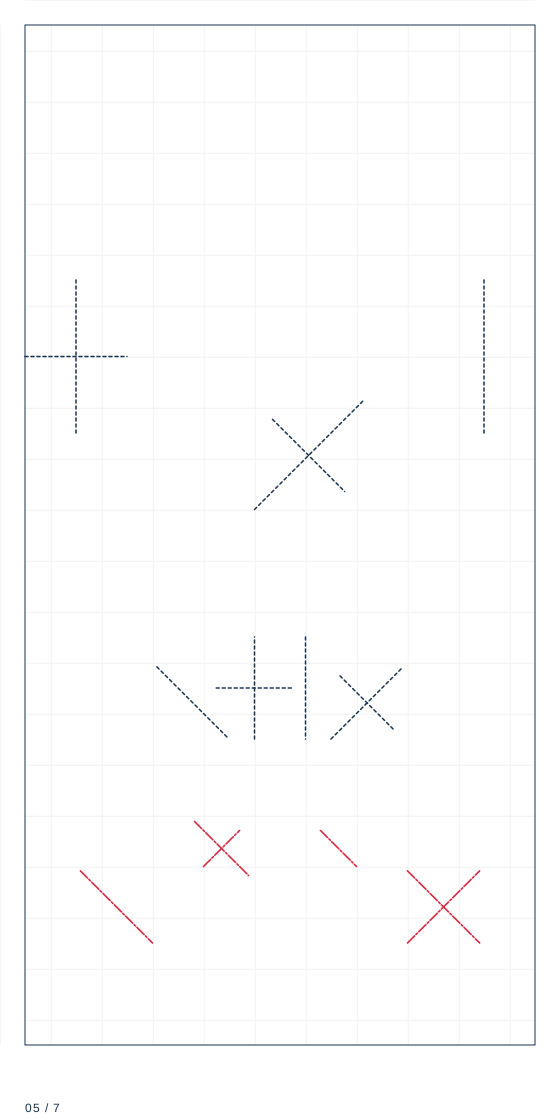
Step 5
At each top corner, reverse fold the corner outward so it swings away from the centre, at 2.6 cm from the outer edge.
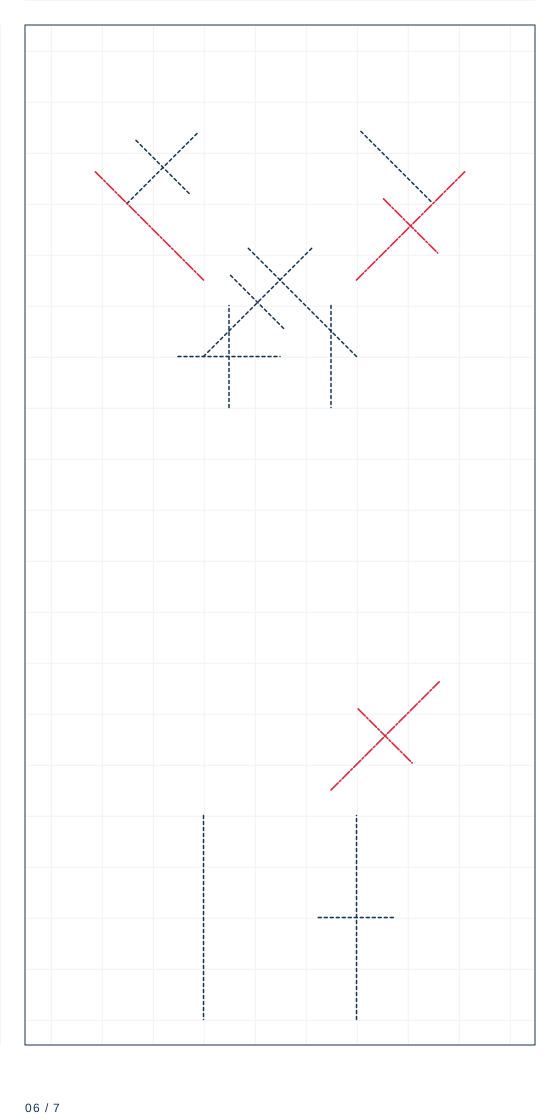
Step 6
Repeat the outward reverse on the other top corner, matching the distance exactly.
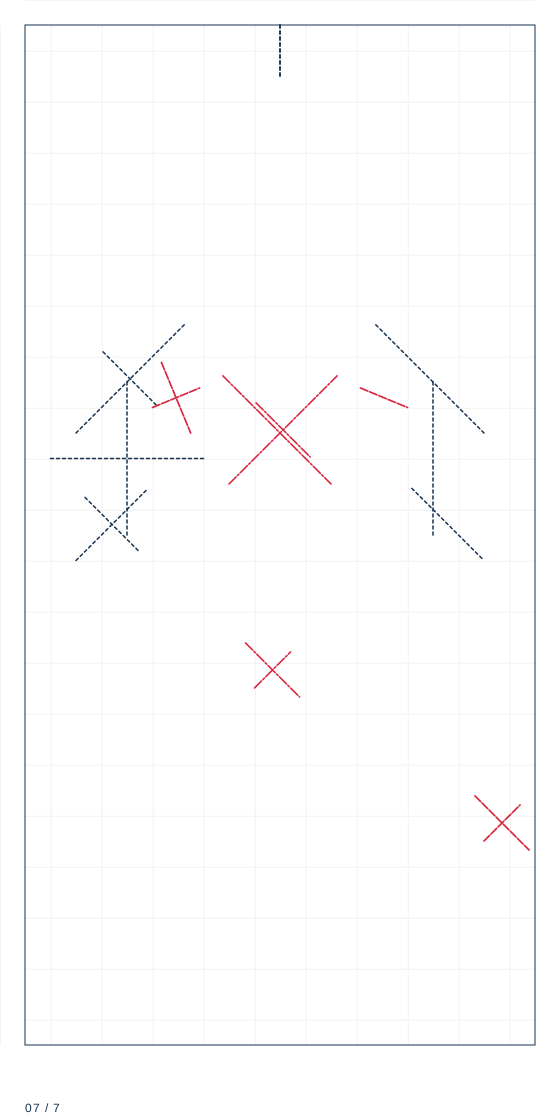
Step 7
Fold the two top flaps behind the model along the horizontal middle line, then round each lobe by pressing its outer edge into a gentle curve.
Why 1:2 and not a square
A square heart has to borrow height from the lobes, so the top comes out narrow. A 1:2 rectangle gives 7.5 cm of spare length on a 15 cm strip, and that is exactly what the two rounded lobes need. The finished heart is 9.8 cm wide and 8.4 cm tall.
The two reverse folds
Steps 5 and 6 are outward reverse folds at the top corners. Each one turns a flat corner into a rounded lobe by reversing the fold direction at the corner's midpoint. The two must be reversed at the same distance from the outer edge; on a 15 cm strip that is 2.6 cm.
Getting a heart that lies flat
The heart will bow if the centre line is over-creased while the lobes are under-creased. Crease the central spine once, firmly, and then crease each lobe twice with a lighter thumb pressure. Placed under a book for ten minutes, a paper heart stays flat enough to glue onto a card.
Paper specification
| Sheet size | 15 cm |
|---|---|
| Sheet ratio | 1:2 |
| Paper weight | 80 gsm |
| steps | 7 |
| Difficulty | ★★☆☆☆ |
| Base | double-kite |
A 1:2 rectangle (15 x 7.5 cm) rather than a square. The heart needs the extra length for the two lobes.
Crease symbol quick reference
| Crease notation used | count | first move |
|---|---|---|
| Mountain fold | 2 | Locate the line on the diagram; confirm the direction by looking at the adjacent valley folds. |
| Valley fold | 4 | Bring the edge or corner exactly to its target point and hold it there. |
| Reverse fold | 2 | Open the point along its existing crease, all the way to the base. |
What goes wrong
The top is pointy, not lobed
The reverse folds in steps 5 and 6 were made inward. They must swing the corners away from the centre line.
The heart curls up
The lobes were creased harder than the spine. Flatten under a book for ten minutes.
Making it hold
- Measure both reverse folds from the outer edge, not from the centre.
- Round the lobes with a thumb, pressing from the outside inward.
- Crease the spine once and the lobes twice, lightly.