★★☆☆☆ Starter folds · 7 steps
Five-Point Star from a Square
Published · By The Origami Desk
A regular pentagon cannot be folded from a square by guessing. It needs one measured step: dividing the half-width in a ratio of 1 to 1.618. Everything after that is symmetry.
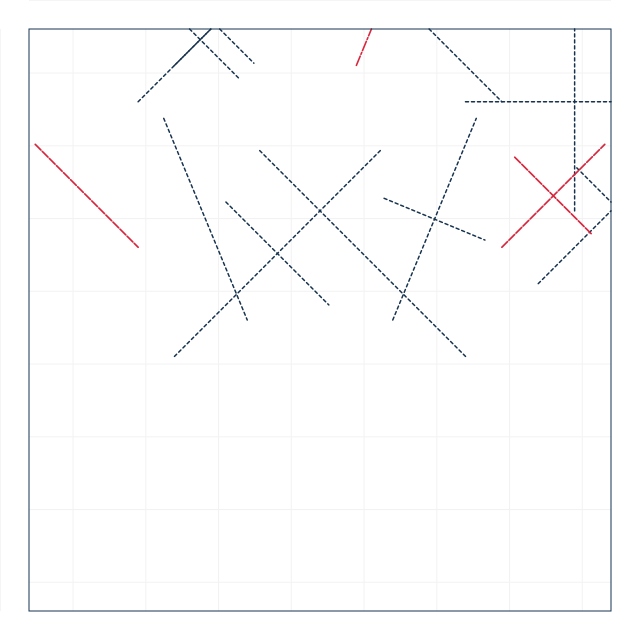
finished crease pattern
Fold sequence
7 / 7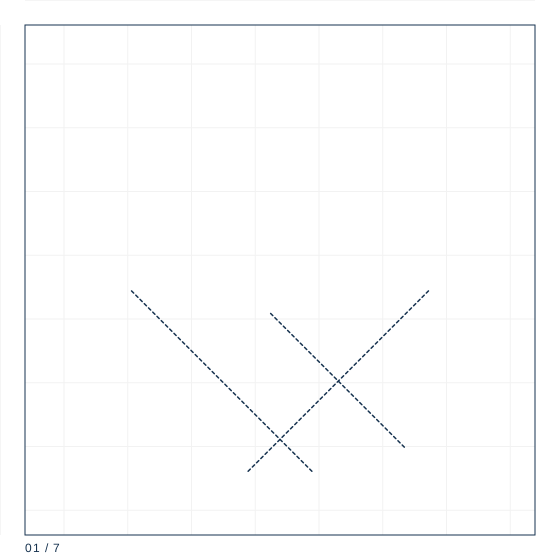
Step 1
Square 15 cm white side up. Fold in half vertically and unfold.
Step 2
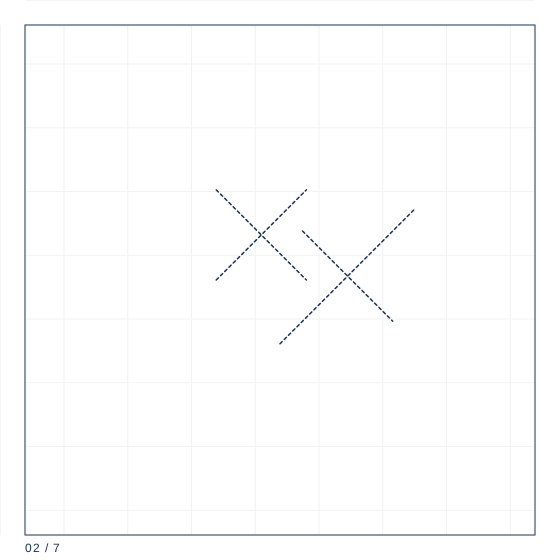
Fold the bottom-left corner to the top edge, crease and unfold. Note where that diagonal crosses the vertical centre line.
Step 3
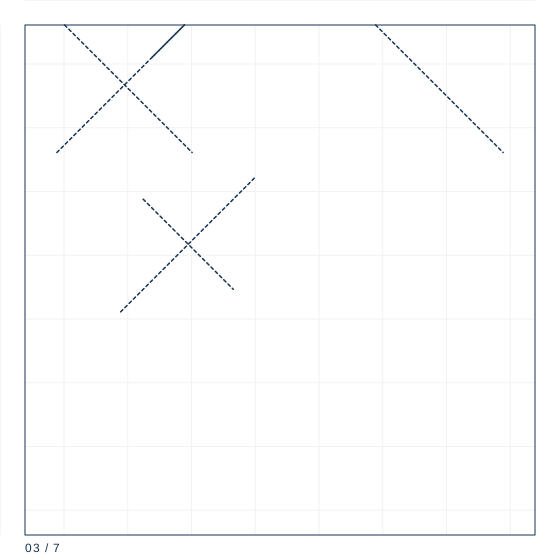
Fold the bottom edge upward through that crossing point and crease. Fold the top edge down to meet this fold and unfold.
Step 4
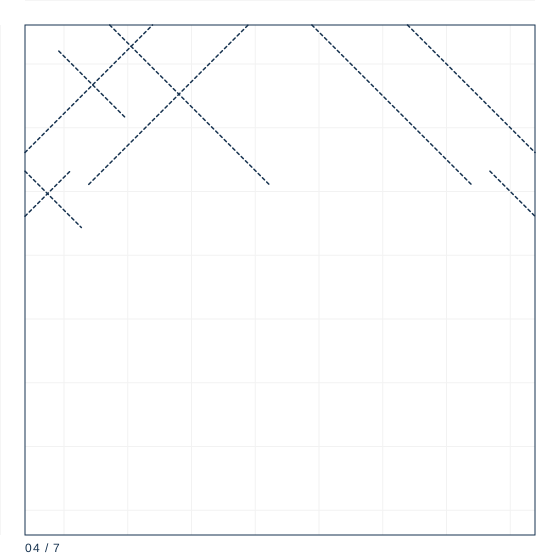
Fold the bottom-left corner to that new line, then fold the remaining strip over. Unfold everything and cut or tear along the two pentagon creases.
Step 5
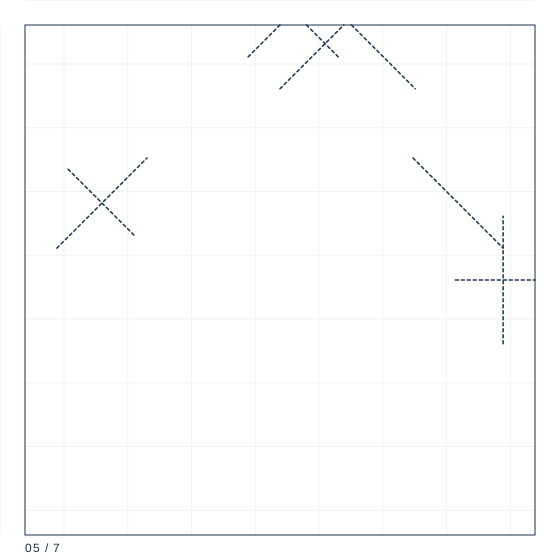
You now have a regular pentagon. Fold all five diagonals — the lines joining each corner to the two non-adjacent corners — as valleys, and unfold.
Step 6
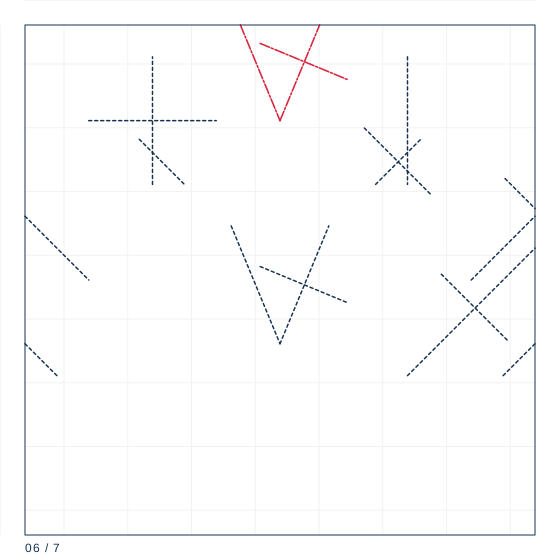
Collapse the pentagon along those five diagonals so that all five corner points swing inward and meet at the centre.
Step 7
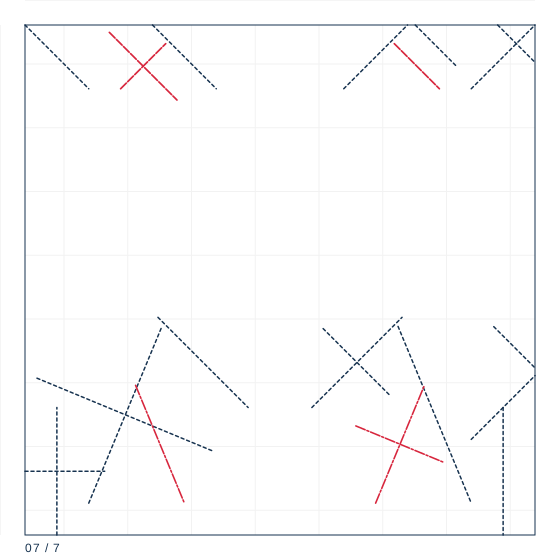
Flatten, then reverse fold each of the five points outward at 72 degrees so the arms splay evenly. The star is done.
The golden-section step
Fold the square in half vertically and unfold. Fold the bottom-left corner up to the top edge, crease, and unfold, then fold the bottom edge up so that it passes through the point where that diagonal crosses the centre line. That mark divides the half-width into the golden ratio. In metric terms on a 15 cm sheet, the mark lands 4.64 cm from the left edge.
Cutting the pentagon
Once the golden mark is made, two folds give you the pentagon outline. The finished pentagon inscribes a circle of 7.5 cm diameter on a 15 cm square — the same size as the original sheet's inscribed circle, so nothing is wasted except four thin corner triangles.
Collapsing into a star
Steps 5 to 7 take the pentagon down to the star in one collapse. The pentagon folds flat along its five diagonals; the resulting shape is a star with arms 4.4 cm long and a point-to-point span of 10.4 cm. Because every arm is folded from a doubled layer, the flat star is only 0.2 mm thick and can be ironed flat if you want to use it as a decoration.
Paper specification
| Sheet size | 15 cm |
|---|---|
| Sheet ratio | 1:1 |
| Paper weight | 70 gsm |
| steps | 7 |
| Difficulty | ★★☆☆☆ |
| Base | pentagon |
15 cm square at 70 gsm for a flat star, or 12 cm at 60 gsm if you plan to fold five of them into a chain.
Crease symbol quick reference
| Crease notation used | count | first move |
|---|---|---|
| Mountain fold | 1 | Locate the line on the diagram; confirm the direction by looking at the adjacent valley folds. |
| Valley fold | 6 | Bring the edge or corner exactly to its target point and hold it there. |
| Reverse fold | 1 | Open the point along its existing crease, all the way to the base. |
What goes wrong
The pentagon is visibly irregular
The golden mark was rounded off. Measure it: 4.64 cm from the left edge on a 15 cm sheet.
The star arms do not match
One diagonal was folded as a mountain and the rest as valleys. Re-crease all five consistently.
Making it hold
- Make the golden-section mark before anything else; every later fold references it.
- Fold the five diagonals all in the same direction, then reverse the collapse for a cleaner star.
- Check the star by standing it on a table — all five arms should touch at the tips, not the bases.