★★★☆☆ Core folds · 8 steps
Sailing Boat with a Standing Sail
Published · By The Origami Desk
A boat that has a hull, a mast and a sail, all from one square, and that sits on a shelf without any support. The trick is where the sail gets its height from: it is a bird base point folded up and back down.
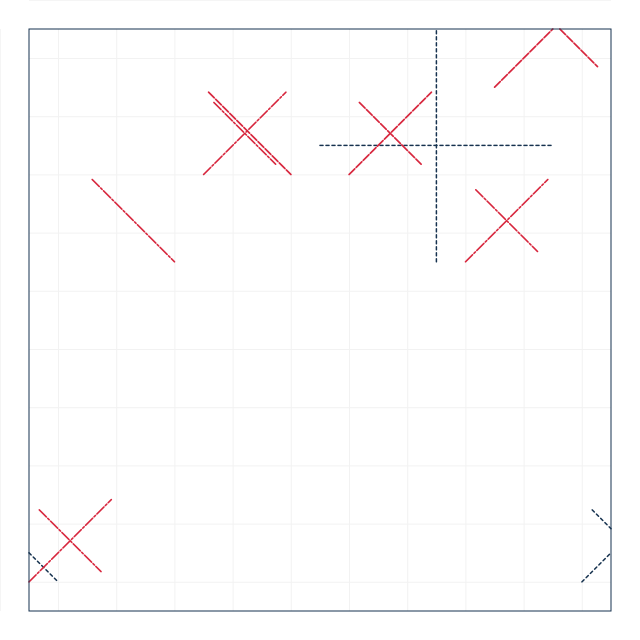
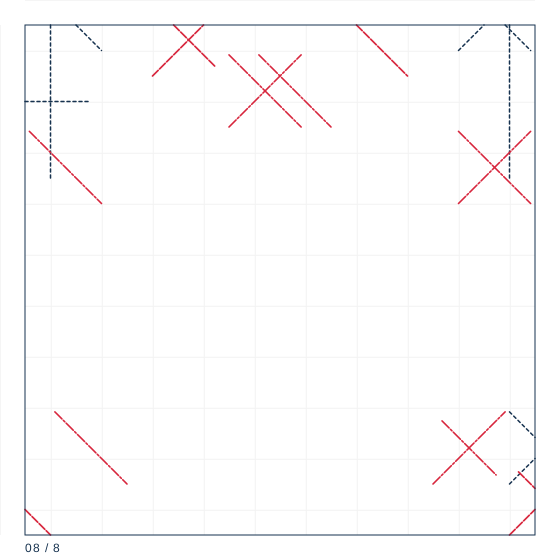
finished crease pattern
Fold sequence
8 / 8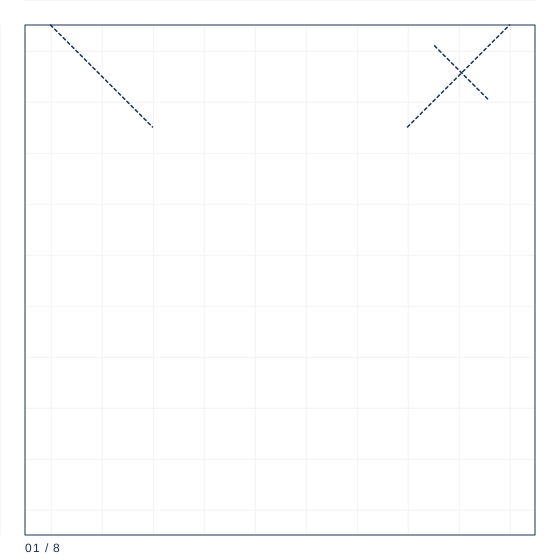
Step 1
Square 18 cm, white side up. Fold both diagonals and both centre lines as valleys, then collapse onto the preliminary base.
Step 2
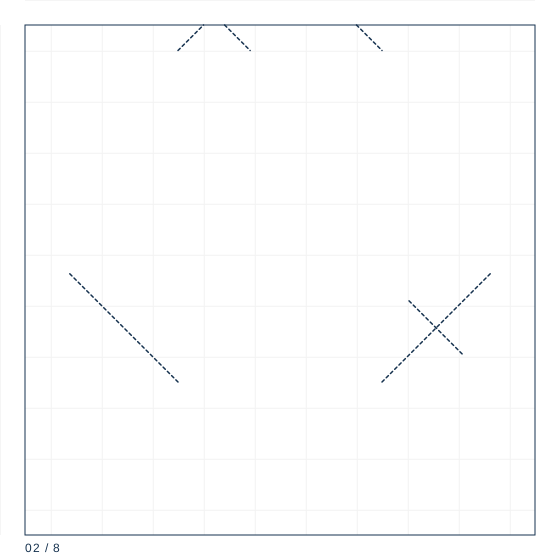
Place the base open end down and fold the lower edges of the front layer in to the centre line.
Step 3
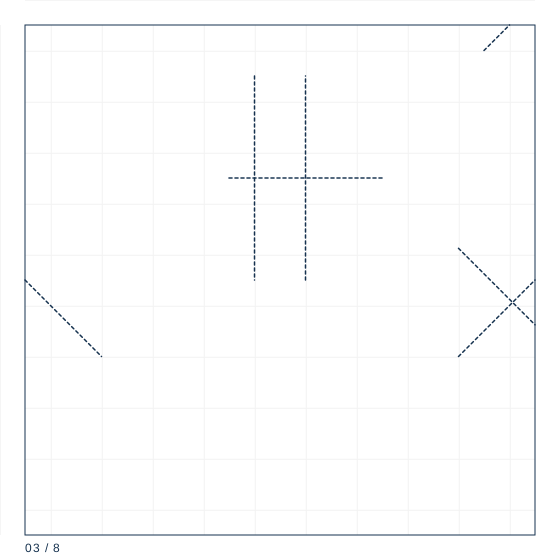
Petal fold the front layer flat, turn the model over, and repeat on the back. You have a bird base.
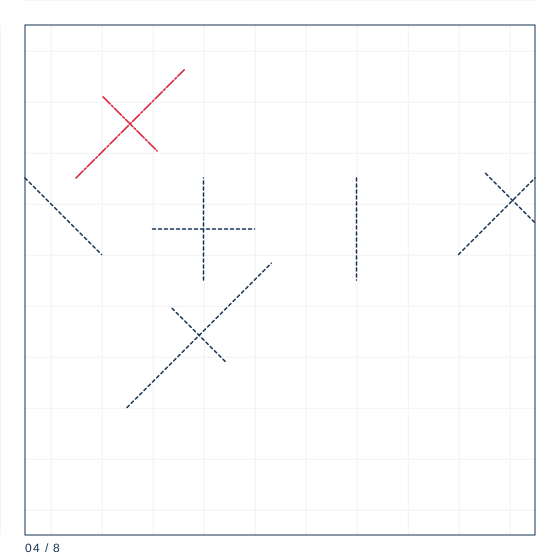
Step 4
Fold the two long points up so they stand vertically, then reverse fold the front one forward at half its length.
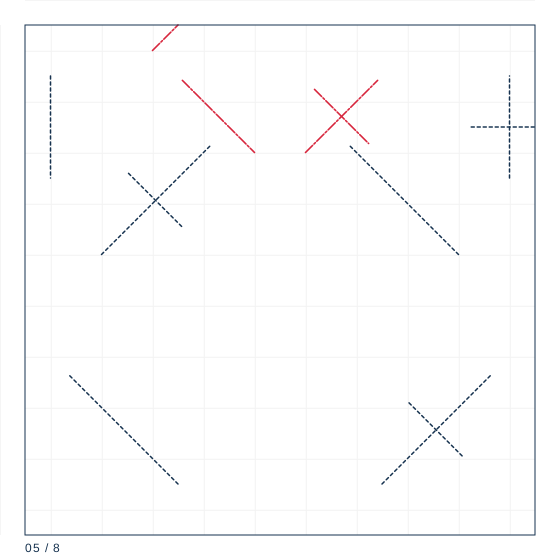
Step 5
Fold the other long point down against the body and tuck its tip into the layers — this is the mast.
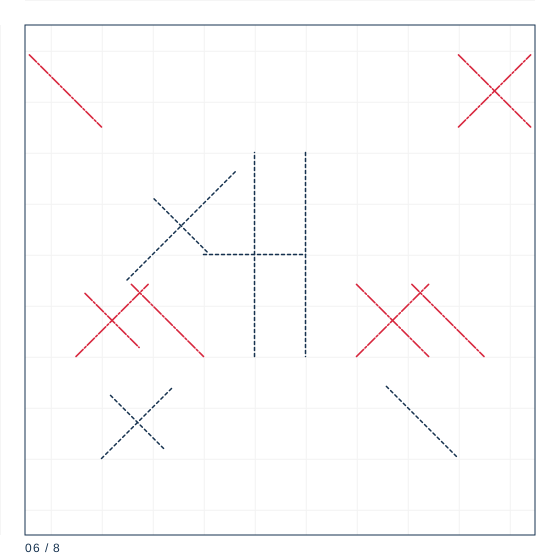
Step 6
Reverse fold the front point upward so it stands 6.3 cm above the hull, then fold its upper third back down against the mast.
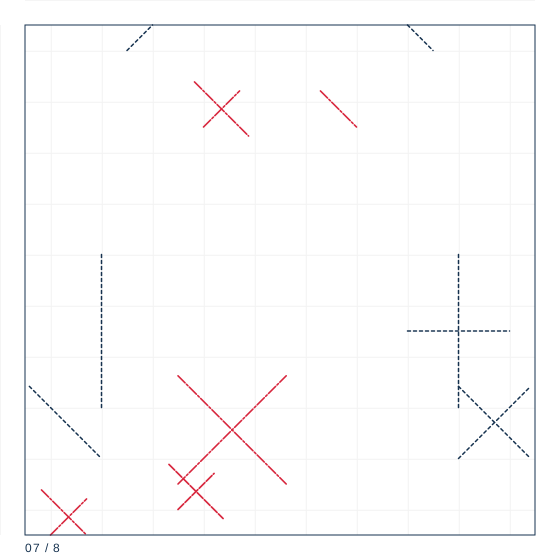
Step 7
Open the two lower flaps outward to 90 degrees and press the base flat from inside to form the hull.
Step 8
Curve the sail slightly with a thumb, stand the boat on its flat base, and adjust the mast until it is vertical.
Where the sail comes from
The sail is not a separate flap. Steps 6 and 7 take the front point of the bird base, reverse fold it upward, then fold it back down against the mast. That double fold is what makes the sail stand 6.3 cm above the hull on an 18 cm sheet, instead of flopping sideways.
The hull
The hull is formed by opening the two lower flaps outward and pressing the bottom flat. From 18 cm paper the hull is 8.1 cm long and 3.2 cm wide at the beam, and it will actually float for a few minutes, though the water reaches the sail in about ninety seconds and the mast then bends.
Making it stand
The boat stands on its hull, which has a flat base 8.1 cm by 2.4 cm. That narrow footprint is why the finished model tips over if you set it down too quickly. Press the base flat with two fingers on the inside before you set it down, and slightly curve the sail so its weight sits over the centre of the hull.
Paper specification
| Sheet size | 18 cm |
|---|---|
| Sheet ratio | 1:1 |
| Paper weight | 80 gsm |
| steps | 8 |
| Difficulty | ★★★☆☆ |
| Base | bird-sail |
18 cm square at 80 gsm, folded from the white side so the hull shows the coloured reverse and the sail stays white.
Crease symbol quick reference
| Crease notation used | count | first move |
|---|---|---|
| Mountain fold | 2 | Locate the line on the diagram; confirm the direction by looking at the adjacent valley folds. |
| Valley fold | 3 | Bring the edge or corner exactly to its target point and hold it there. |
| Reverse fold | 3 | Open the point along its existing crease, all the way to the base. |
What goes wrong
The sail flops to one side
Only one of the two sail folds in step 6 was made. Both the up-fold and the back-fold are needed to stiffen it.
It tips over immediately
The hull base is domed. Reopen and press the base flat from inside.
Making it hold
- Fold the mast before the sail; the sail's fold is referenced to it.
- Press the hull base flat from the inside, not by pushing on the outside.
- Curve the sail slightly so its weight sits over the hull centre.